
The Department for Education (DfE) has proposed changes to the Key Stage 4 Progress 8 curriculum model. IFST's Education and Careers Manager, Robin Leaper, explains why the Institute is concerned about the impact on GCSE Food and Nutrition and the wider food sector.
What is the proposed Progress 8 reform?
The Department for Education has proposed replacing the existing EBACC-based Progress 8 model with a new curriculum model.
Under the proposed model, English, Maths and Science would each have their own dedicated slots, alongside two additional GCSEs selected from a list of designated 'breadth' subjects. The final 2 qualifications in ‘choice’ slots, contain all other subjects and all vocational courses from the DfE-approved list.
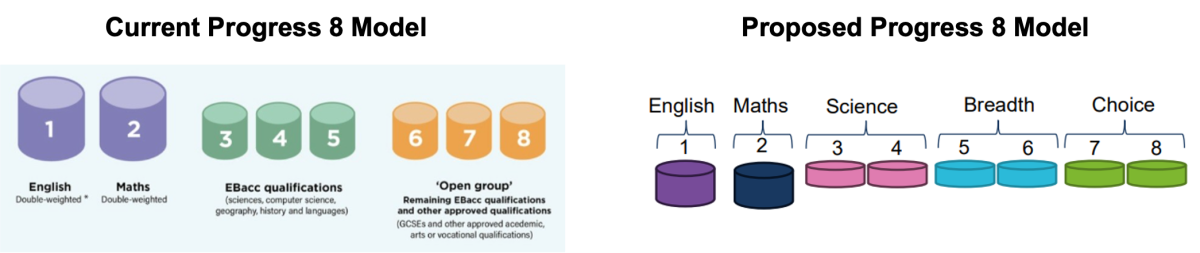
GCSE Food and Nutrition is not included within the proposed 'breadth' list of subjects, despite Design and Technology being included. Instead, it is only available within the 'choice' slot.
Why is this an issue for Food and Nutrition?
IFST is deeply concerned that placing GCSE Food and Nutrition solely within the 'choice' slot would significantly marginalise this important subject within the curriculum. We believe GCSE Food and Nutrition should instead be included within the 'breadth' slot.
As schools respond to the revised Progress 8 model, many will redesign their Key Stage 4 curriculum. Positioning GCSE Food and Nutrition only within the 'choice' slot is likely to limit opportunities for pupils to study the subject and may lead some schools to stop offering it altogether.
Food education is already vulnerable in many schools because of pressures on specialist teaching spaces, equipment and staffing. These proposed changes risk further deprioritising the subject, with knock-on effects at Key Stage 3 through reduced investment in specialist teachers and facilities.
What impact could this have on the food sector?
The proposed changes could have a significant impact on the food sector talent pipeline.
Many universities are already experiencing recruitment challenges for food science and nutrition degree programmes because there is no clear educational pathway through school. A Times Higher Education analysis published in September 2025 found that almost one fifth of undergraduate food, agriculture and related programmes closed between the 2024/25 and 2025/26 academic years.
The recent House of Lords inquiry and the Government's National Food Strategy both highlight the need for a joined-up approach to health and nutrition. Delivering these ambitions requires a workforce with a strong understanding of food science and nutrition.
IFST believes GCSE Food and Nutrition provides an essential scientific foundation. The qualification establishes a strong grounding in food and nutrition as a discipline while creating a clear progression route into further study and employment.
Weakening the pathway from Key Stage 4 through Key Stage 5 and higher education will inevitably reduce the number of people entering the food sector. Once this pattern becomes established, rebuilding that pipeline will require significant time, investment and effort.
Why should Food and Nutrition be included as a 'breadth' subject?
Food and Nutrition is recognised nationally as part of Design and Technology throughout Key Stages 1 to 3. However, at Key Stage 4 it sits outside Design and Technology as a separate GCSE. IFST believes it should be included within the 'breadth' slot alongside Design and Technology, rather than being limited to the 'choice' slot.
The proposed breadth slot currently includes:
- Art and Design
- History
- Geography
- Religious Studies
- Ancient History
- Languages
- Music
- Dance
- Drama and Theatre
- Graphic Design
- Design and Technology
- Computer Science
GCSE Food and Nutrition is firmly grounded in scientific disciplines, including food chemistry, biology and physics. Pupils develop analytical skills, undertake hypothesis-based investigations and gain an understanding of scientific methods and processes.
The Government's National Food Strategy also highlights the growing need for STEM-skilled professionals within the UK's food system. GCSE Food and Nutrition plays an important role in developing those skills.
What other challenges could these changes create?
Nutritional awareness and practical food skills are fundamental to improving public health and reducing long-term pressure on NHS services.
Restricting GCSE Food and Nutrition to the 'choice' slot runs counter to the aims of the National Food Strategy, particularly the commitment under Good Growth to ensure the food sector attracts talent and develops a skilled workforce across every region.
IFST is also concerned about the potential impact on disadvantaged and marginalised communities. Many pupils thrive in applied, practical subjects such as GCSE Food and Nutrition, and reducing access could limit opportunities for engagement and achievement.
In addition, current SEND reforms encourage schools to create a more universal curriculum. Food education is often one of the most accessible and engaging subjects for pupils with additional needs. Marginalising the subject would therefore undermine wider government ambitions around inclusion.
What would IFST like to happen?
IFST does not agree with the proposed categorisation and strongly urges the Department for Education to reconsider the placement of GCSE Food and Nutrition by including it within the 'breadth' slot.
The Institute will continue to engage with stakeholders including the Food and Drink Federation, the Food Teachers Centre and the Department for Education to advocate for this change. IFST also encourages organisations and individuals across the food system who share these concerns to make their views known during the consultation process.
Further information
Read IFST's full response to the Department for Education consultation on the proposed Key Stage 4 performance measures: IFST consultation response.
You can also read Food Manufacture's coverage of the proposed reforms and IFST's concerns: Food GCSE may be downgraded in curriculum shake-up.